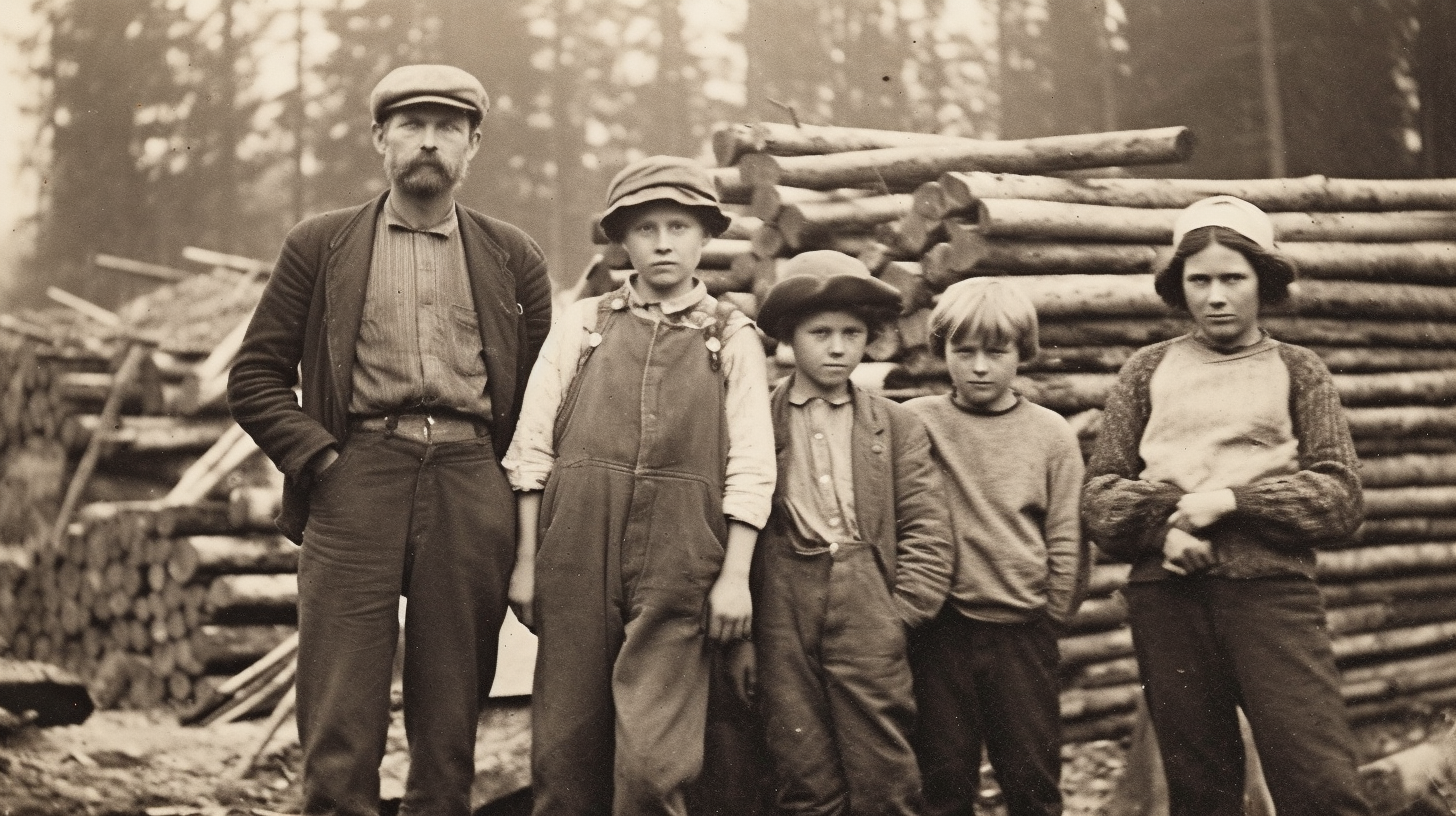
Family-owned lumber businesses have played a significant role in the history and development of the lumber industry. These businesses have often started as small operations, passed down through generations, and have grown into successful companies that have spanned centuries. In this article, we will explore the early origins of family-owned lumber businesses, highlight prominent early examples, discuss multi-generational legacies, examine modern-day family lumber businesses, and identify the keys to their long-term success.
Early Origins: The Foundation of Family-Owned Lumber Businesses
The origins of family-owned lumber businesses can be traced back to the early days of the industry. Lumbering was often a communal effort, with families and communities coming together to harvest timber. Independent logging operations were passed down through generations, with skills and knowledge of the trade being handed down from father to son.
Sawmills, the backbone of the lumber industry, also had humble beginnings as small water-powered mills run by families. These mills were typically located near rivers or streams, harnessing the power of water to saw logs into lumber. Family members worked together, operating the machinery and managing the day-to-day operations of the mill.
Prominent Early Family Lumber Businesses
Several family-owned lumber businesses emerged as prominent players in the industry. These companies started small but eventually grew into major players, expanding their operations nationwide. Let’s take a closer look at some notable examples:
Weyerhaeuser
Weyerhaeuser, founded in 1900, is a prime example of a family-owned lumber business that grew into an industry giant. The company was started by Frederick Weyerhaeuser, who purchased 900,000 acres of timberland in Washington state. Over the years, Weyerhaeuser acquired more land, expanded its operations, and became one of the largest timberland owners in the United States.
Potlatch
Potlatch, founded in 1903, is another family-owned lumber business with a rich history. The company was established by members of the White family in Idaho. Potlatch initially focused on logging and milling operations but later diversified into real estate and resource management. Today, Potlatch is a leading provider of wood products, managing millions of acres of timberland.
Georgia-Pacific
Georgia-Pacific, founded in 1927, has its roots in a family-owned lumber business. Owen R. Cheatham started the company with a single plywood plant in Augusta, Georgia. Over the years, Georgia-Pacific expanded its operations, acquiring mills and timberlands across the United States. The company is known for its diverse range of wood products and is one of the largest manufacturers of plywood and lumber in North America.
These early family-owned lumber businesses set the stage for the industry’s growth and development. Through their hard work, innovation, and commitment to quality, they paved the way for future generations of family-owned lumber businesses.
Multi-Generational Legacies: Passing the Torch
One of the defining characteristics of family-owned lumber businesses is their ability to span multiple generations. These businesses have successfully passed the torch from one generation to the next, ensuring their longevity and continuity. Let’s explore a couple of examples:
Collins Pine Company
The Collins Pine Company, founded in the 1850s, is one of the oldest family-owned lumber businesses in the United States. The company has been in continuous operation for over 150 years, spanning six generations of the Collins family. Based in California, the Collins Pine Company is known for its sustainable forestry practices and commitment to environmental stewardship.
Pleasant River Lumber Company
The Pleasant River Lumber Company, established in the 1870s, is another multi-generational family-owned lumber business. The company has been in the hands of the Rivers family for over a century, with five generations actively involved in its operations. With mills in Maine, the Pleasant River Lumber Company specializes in producing high-quality lumber products.
These multi-generational family-owned lumber businesses serve as a testament to the resilience and dedication of families who have built and sustained successful enterprises in the industry. They have weathered economic challenges, evolving market dynamics, and changing customer demands, adapting their businesses to ensure their continued success.
Modern-Day Family Lumber Businesses: Thriving in a Changing Landscape
While many large corporations dominate the lumber industry today, there are still numerous smaller family-owned lumber businesses thriving in local communities. These businesses play a vital role in supplying lumber and wood products to their respective regions. They often have a deep understanding of the local market and are able to cater to the unique needs of their customers.
Family-owned lumber businesses have also carved out niches in specialty markets. They offer products and services that cater to specific customer demands, such as custom milling, sustainable lumber options, or specialized wood products for niche industries. By focusing on quality, customer service, and tailored solutions, these businesses have been able to differentiate themselves and find success in a competitive market.
To stay competitive in today’s fast-paced business environment, family-owned lumber businesses have embraced technology and innovation. They have adopted advanced machinery and automation to improve efficiency and productivity. Additionally, they have leveraged digital marketing strategies to reach a wider audience and connect with customers online.
Keys to Long-Term Success: Values, Innovation, and Planning
The long-term success of family-owned lumber businesses can be attributed to several key factors. Let’s explore some of these factors:
Commitment to Quality and Values
Family-owned lumber businesses often prioritize quality craftsmanship and uphold strong values. They take pride in their products and services, ensuring that every piece of lumber meets the highest standards. This commitment to quality builds trust with customers and fosters long-term relationships.
Investment in Employees and Community
Family-owned lumber businesses understand the importance of investing in their employees and the local community. They provide training and development opportunities for their staff, creating a skilled workforce. Additionally, they actively participate in community initiatives, supporting local schools, charities, and events.
Willingness to Innovate and Change with the Times
Successful family-owned lumber businesses are not afraid to embrace innovation and adapt to changing market trends. They continuously seek new technologies, processes, and products to stay ahead of the competition. By embracing change, they can remain relevant and meet the evolving needs of their customers.
Succession Planning and Training Next Generation
A crucial aspect of the long-term success of family-owned lumber businesses is effective succession planning. These businesses invest in grooming the next generation of leaders to ensure a smooth transition of ownership and management. By providing training and mentorship opportunities, they prepare the younger generation to take the reins and continue the family legacy.
In conclusion, family-owned lumber businesses have played a significant role in the history and evolution of the lumber industry. From their early origins as small operations to becoming major players, these businesses have demonstrated resilience, innovation, and a commitment to quality. Through multi-generational legacies, modern-day success, and adherence to key principles, family-owned lumber businesses have left a lasting impact on the industry and continue to thrive in today’s competitive landscape.
Share Your Family Lumber Business Story
Do you come from a family with generations of lumber experience? If your family has been in the industry for decades, we’d love to hear your story. Please contact us today to be featured in an upcoming article on family lumber business history.